
Imagine working on a project or enjoying your favorite movie when suddenly the screen goes blurry or dim. It can be frustrating, but LED monitors solve this problem efficiently. Using Light-Emitting Diodes (LEDs), these monitors deliver brighter, sharper images while consuming less energy. Whether for gaming, professional work, or entertainment, LED monitors provide an enhanced visual experience. Let’s explore everything you need to know about them.
What Is an LED Monitor?
An LED monitor is a type of display used in computers, TVs, and other devices. Unlike traditional monitors, LED monitors use small lights called Light-Emitting Diodes to illuminate the screen. This technology provides brighter visuals, sharper colors, and energy efficiency. Their slim and lightweight design makes them ideal for modern setups, from home offices to gaming stations.
LED monitors are popular across various applications, including gaming, video streaming, design work, and professional presentations. Their superior color accuracy and reduced energy consumption make them a preferred choice for anyone seeking high-quality visuals.
The History of LED Monitors
The journey of LED monitors began with Dr. Nick Holonyak Jr., who invented the first visible LED light in 1962. This invention laid the foundation for modern LED technology, eventually transforming how displays are made.
Key Milestones in LED Monitor Development:
- 1962: Dr. Nick Holonyak Jr. creates the first visible LED.
- 1970s: LEDs appear in small displays, like digital clocks and signage.
- 1990s: LEDs are incorporated into calculators and handheld devices.
- 2000s: LED-backlit screens emerge in TVs and computer monitors.
- 2010s: LED monitors gain widespread adoption across devices worldwide.
The continuous evolution of LED technology has led to brighter, more efficient, and versatile displays suitable for all types of users.
How LED Monitors Work
LED monitors create images using tiny lights called Light-Emitting Diodes. These LEDs illuminate the screen and, combined with filters and display panels, produce vivid and accurate visuals.
Steps in LED Monitor Functionality:
- LED Lights: Numerous small LEDs light up the screen evenly.
- Color Filters: These filters convert light into precise colors like red, green, and blue.
- Display Panel: The panel controls brightness and color for each pixel.
- Image Formation: Combined, these elements generate clear pictures, videos, and text.
The result is a display that offers sharper colors, better contrast, and an overall superior viewing experience compared to older technologies.
Types of LED Monitors
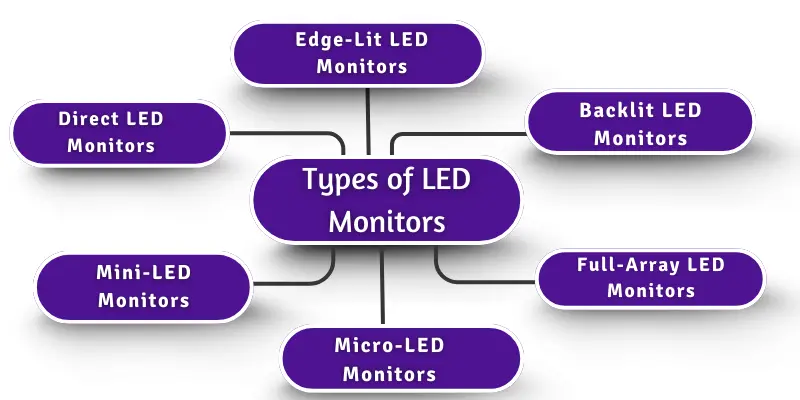
LED monitors come in several types, each designed for specific needs. Understanding these types can help you choose the best monitor for your purpose.
Edge-Lit LED Monitors
Edge-lit monitors place LEDs along the screen’s edges. This design keeps the display thin and energy-efficient. However, brightness may vary slightly across the screen. They are ideal for general use and sleek, modern setups.
Backlit LED Monitors
Backlit monitors use LEDs behind the screen to enhance brightness and color accuracy. These monitors provide a clearer image and are suitable for video streaming, graphic design, and professional editing.
Mini-LED Monitors
Mini-LED monitors feature smaller LEDs for improved brightness and contrast. This allows for sharper visuals and more precise color representation. Mini-LEDs are perfect for movies, games, and creative work requiring detailed visuals.
Full-Array LED Monitors
Full-array monitors place LEDs behind the entire screen. This setup delivers uniform brightness, deeper blacks, and vibrant whites. Full-array monitors excel in gaming, video editing, and cinematic experiences.
Micro-LED Monitors
Micro-LED monitors use individual LEDs for each pixel. This creates unmatched clarity, bright colors, and deep blacks. Micro-LEDs are ideal for professional design work, high-end entertainment, and any scenario demanding precise visuals.
Direct LED Monitors
Direct LED monitors position LEDs directly behind the display. This ensures bright, even illumination across the screen. They are perfect for gaming and media consumption due to their crisp, clear images.
Uses of LED Monitors
LED monitors have applications across multiple fields, enhancing productivity, entertainment, and learning experiences.
Healthcare
- Display X-rays, scans, and other medical images clearly.
- Help medical professionals track patient data accurately.
- Enable quick decision-making during emergencies.
Business
- Facilitate presentations and meetings with clear visuals.
- Display complex data and reports effectively.
- Improve collaboration and communication in office environments.
Education
- Teachers use LED monitors for interactive lessons and presentations.
- Students benefit from clearer displays for learning materials.
- Enhance engagement through multimedia content.
Entertainment
- Gamers enjoy fast response times and vibrant visuals.
- Movies and shows appear brighter and more lifelike.
- Improve overall entertainment quality for home theaters.
Design and Editing
- Artists and designers view accurate colors and fine details.
- Video and photo editing becomes more precise.
- Professional work reaches higher quality standards.
Advantages of LED Monitors
- LED monitors offer numerous benefits over traditional screens:
- Energy-efficient and eco-friendly.
- Provide bright, clear images with accurate colors.
- Slim, lightweight, and stylish designs.
- Fast response times suitable for gaming.
- Reduce eye strain with lower blue-light emissions.
- Wide variety of sizes and models available.
- Instant-on capability without warm-up.
- Work well in bright or dim environments.
- Adjustable settings to match lighting conditions.
Disadvantages of LED Monitors
- Despite their benefits, LED monitors have some limitations:
- Can be expensive initially.
- Narrow viewing angles on some models.
- Possible backlight bleeding or uneven brightness.
- Less effective in very dark rooms compared to OLED.
- Some models may have dead pixels over time.
- Lower-end models may blur fast-moving scenes.
- Limited deep black contrast compared to alternative technologies.
Choosing the right LED monitor involves balancing features, budget, and intended use to ensure the best visual experience.
Frequently Asked Questions:
What is an LED monitor?
An LED monitor is a type of display that uses Light-Emitting Diodes (LEDs) to illuminate the screen. They are energy-efficient, provide brighter images, and offer sharper color accuracy compared to older LCD or CRT monitors.
How do LED monitors work?
LED monitors work by using tiny LEDs to light up the display. The light passes through color filters and display panels, creating clear, vibrant images with accurate colors. Different types of LED monitors use these lights in unique ways to enhance brightness, contrast, and detail.
How do LED monitors differ from LCD monitors?
While LCD monitors use fluorescent lights for backlighting, LED monitors use LEDs. This makes LED monitors thinner, more energy-efficient, and capable of delivering brighter images with better contrast and color accuracy.
What is the lifespan of an LED monitor?
Most LED monitors last between 30,000 to 60,000 hours of use. Proper care, such as avoiding extreme brightness levels and keeping the monitor cool, can extend its lifespan.
Can LED monitors reduce eye strain?
Yes. Many LED monitors come with blue-light filters and flicker-free technology, which help reduce eye fatigue during long hours of use.
Which LED monitor is best for gaming or movies?
For gaming and entertainment, Full-Array, Mini-LED, and Micro-LED monitors are ideal. They offer high contrast, fast response times, and vibrant colors that enhance immersive experiences.
Are LED monitors energy-efficient?
Yes. LED monitors consume less power than traditional LCD or CRT screens because LEDs use minimal electricity while providing brighter and more vibrant images.
Can LED monitors display 4K or HDR content?
Many modern LED monitors support 4K resolution and HDR (High Dynamic Range), offering sharper images, deeper colors, and improved contrast for movies, games, and professional work.
Conclusion
LED monitors have transformed the way we interact with digital screens. From their invention in the 1960s to today’s advanced Mini-LED and Micro-LED models, these displays provide brighter, sharper, and more energy-efficient visuals than ever before. With a wide range of types and applications—from gaming and entertainment to healthcare, education, and professional design—LED monitors offer unmatched versatility. Choosing the right LED monitor depends on your needs, whether it’s a slim edge-lit model for everyday use, a full-array or Mini-LED monitor for immersive entertainment, or a Micro-LED display for precise color accuracy.