In early 2026, a significant development occurred in the United States that captured global attention. After a major disagreement over the ethical limits of military AI use, former U.S. President Donald Trump ordered federal agencies to stop using AI technology developed by Anthropic.
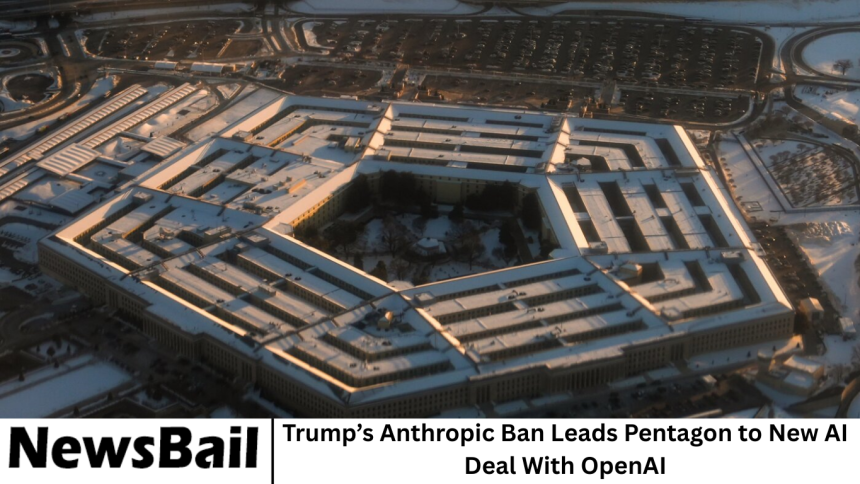
Shortly after the ban, the U.S. Department of Defense moved toward a new partnership with OpenAI, one of the world’s leading artificial intelligence organizations. The deal marked a major shift in how the U.S. government approaches AI development and defense collaboration.
The situation sparked widespread debate among policymakers, technology experts, and the public. Questions about ethics, national security, corporate influence, and the future of military AI suddenly became central topics in discussions about technology and governance.
More Read: Trump Moves to Ban Anthropic AI Tools Across Federal Agencies
The Rise of Artificial Intelligence in National Security
Over the past decade, artificial intelligence has transformed how governments manage information and respond to security challenges. Modern defense systems generate enormous volumes of data from satellites, drones, sensors, communication networks, and surveillance equipment.
Human analysts alone cannot process this information quickly enough to make timely decisions. AI systems help solve this problem by analyzing complex datasets and identifying patterns that might otherwise go unnoticed. These technologies assist military planners in several ways, including:
- Intelligence analysis
- Threat detection
- Cybersecurity monitoring
- Strategic planning
- Logistics and supply chain management
Large language models such as ChatGPT and other advanced AI tools can summarize reports, generate briefings, and help analysts interpret complicated intelligence data.
Because of these capabilities, the U.S. government has increasingly relied on private AI companies to develop and deploy advanced machine-learning systems.
Anthropic’s Role in Government AI Projects
Anthropic quickly became one of the most prominent companies working on advanced AI systems designed with safety and ethical principles in mind. Founded by former AI researchers, the company focused on building AI models that prioritize responsible usage and risk reduction.
Its flagship AI system, Claude, gained widespread attention for its strong safety features and ability to handle complex reasoning tasks. Government agencies began experimenting with Claude in various operational environments.
Defense analysts used the system to analyze large collections of documents, summarize intelligence reports, and assist in identifying potential threats. Because the technology could operate securely within restricted networks, it became an attractive option for defense and intelligence communities seeking reliable AI assistance.
However, Anthropic maintained strict guidelines governing how its AI could be used. These guidelines eventually became the center of a major political dispute.
Ethical Safeguards That Sparked the Conflict
Anthropic’s leadership emphasized that powerful AI systems should be deployed carefully to prevent misuse. The company developed internal rules designed to prevent its AI from contributing to activities that could harm individuals or undermine civil liberties.
Two major restrictions created tension with defense officials:
Limits on mass surveillance
The company did not want its AI technology used to monitor large populations or conduct broad domestic surveillance programs.
Restrictions on autonomous weapons
Anthropic opposed the use of AI systems in weapons capable of making lethal decisions without human oversight.
While these safeguards were intended to ensure responsible AI development, some defense leaders argued that they interfered with national security decision-making. Military officials believed the government should determine how technology is used in defense operations, not private companies.
As negotiations between the government and Anthropic continued, disagreements intensified.
The Government Decision to Ban Anthropic
The dispute eventually reached the highest levels of government. After months of disagreement, President Donald Trump issued a directive instructing federal agencies to discontinue their use of Anthropic’s AI technology. The decision effectively removed the company from federal contracts involving sensitive defense.
Officials argued that national security programs must operate without restrictions imposed by private companies. From their perspective, the government needed full authority to deploy AI tools in ways it deemed necessary to protect national interests.
The policy change required agencies to search for alternative AI providers capable of supporting defense operations. This transition opened the door for another major AI company to step in.
The Pentagon’s New Partnership With OpenAI
Soon after the ban on Anthropic, the U.S. Department of Defense began working with OpenAI to deploy new artificial intelligence tools across government systems.
OpenAI is widely known for developing advanced language models such as ChatGPT, which can analyze text, generate detailed responses, and assist with complex research tasks.
The Pentagon’s agreement with OpenAI aimed to integrate similar capabilities into secure government networks.
The partnership focused on several objectives:
- Improving intelligence analysis
- Supporting cybersecurity operations
- Enhancing data processing capabilities
- Assisting with strategic planning and logistics
By adopting OpenAI’s technology, defense officials hoped to maintain the country’s technological leadership while ensuring AI tools remained available for critical national security operations.
How AI Supports Military Operations
Artificial intelligence can significantly improve military efficiency and decision-making. Many defense experts believe that future conflicts will rely heavily on AI-driven analysis and automation.
Some of the most common uses of AI in defense include:
Intelligence Analysis
AI can quickly process large volumes of intelligence reports, satellite imagery, and intercepted communications. By identifying patterns in this data, analysts can detect potential threats faster.
Cybersecurity
Military networks face constant threats from cyberattacks. AI systems help detect unusual activity and prevent intrusions before they cause serious damage.
Logistics Management
Modern military operations require complex supply chains involving equipment, fuel, and personnel. AI can optimize transportation routes and resource allocation.
Decision Support
AI tools can help military leaders evaluate different strategies by simulating possible outcomes and identifying potential risks.
Because of these capabilities, many governments view AI as a critical component of future defense strategies.
Controversy Within the Technology Industry
The Pentagon’s agreement with OpenAI sparked debate throughout the technology industry. Some engineers and researchers believe AI companies should avoid military partnerships entirely. They argue that advanced AI systems could eventually contribute to automated warfare or large-scale surveillance programs.
Others believe that democratic governments must maintain technological superiority to ensure global stability. Supporters of the partnership argue that responsible collaboration between technology companies and defense institutions is necessary to prevent rival nations from gaining an advantage in AI development.
This debate reflects a larger global conversation about how powerful technologies should be controlled and regulated.
The Global Race for Military AI
The United States is not the only country investing heavily in artificial intelligence for defense. Several major powers are developing their own AI-driven military systems, including autonomous drones, advanced cyber tools, and predictive intelligence platforms.
This competition has led many analysts to describe the situation as an AI arms race. Countries are investing billions of dollars into AI research to ensure they remain competitive in future conflicts.
Some of the key areas of development include:
- Autonomous aerial drones
- Robotic ground vehicles
- AI-assisted intelligence analysis
- Cyber warfare technologies
- Advanced battlefield simulations
As these technologies evolve, governments will likely continue partnering with private companies to accelerate innovation.
Ethical Challenges of Military AI
While AI offers powerful capabilities, it also raises significant ethical concerns.
Autonomous Weapons
One of the most controversial topics is the development of autonomous weapons systems. These systems could potentially select and attack targets without direct human control.
Many researchers argue that such weapons should be banned because they remove human judgment from life-and-death decisions.
Surveillance Risks
AI systems can analyze massive datasets from cameras, communications networks, and digital platforms. If misused, these technologies could enable unprecedented levels of surveillance.
Accountability
When an AI system makes a mistake, determining responsibility can be difficult. Questions remain about who should be held accountable if AI contributes to harmful decisions during military operations.
These concerns highlight the need for clear rules governing how AI technology is deployed.
The Future of AI Partnerships in Government
The Pentagon’s new relationship with OpenAI may represent a broader trend toward deeper collaboration between governments and technology companies.
In the coming years, several developments are likely:
- Increased government funding for AI research
- Stronger regulations governing AI development
- More partnerships between defense agencies and technology companies
- Continued debates about ethical limitations on AI use
Technology companies will also face growing pressure from employees, regulators, and the public to ensure their products are used responsibly.
Balancing national security interests with ethical considerations will remain a major challenge.
Frequently Asked Question
Why did the U.S. government stop using Anthropic’s AI?
The government ended its partnership with Anthropic after disagreements over restrictions the company placed on how its AI could be used in defense and surveillance activities.
What is Anthropic’s Claude AI system
Claude is a large language model developed by Anthropic that focuses on safety and responsible AI behavior while performing complex reasoning and language tasks.
Why did the Pentagon partner with OpenAI?
After the Anthropic ban, the Pentagon sought a new AI provider capable of supporting intelligence analysis, cybersecurity operations, and data processing within secure networks.
What role does AI play in modern military operations?
AI helps analyze intelligence data, detect cyber threats, optimize logistics, and support strategic decision-making in defense environments.
Are AI systems used in weapons today?
Some military technologies use AI for targeting assistance and surveillance, but fully autonomous weapons remain a controversial topic.
Why are AI ethics important in defense technology?
AI systems can have significant impacts on privacy, security, and human rights, so ethical guidelines help ensure these technologies are used responsibly.
Will governments continue partnering with AI companies?
Yes. As AI technology becomes more important for national security and economic growth, governments will likely increase partnerships with leading technology firms.
Conclusion
The ban on Anthropic’s technology and the Pentagon’s new partnership with OpenAI represent a significant moment in the evolving relationship between artificial intelligence companies and government institutions. The conflict highlighted a fundamental tension between corporate ethics policies and national security priorities. Anthropic sought to limit how its AI could be used in surveillance and autonomous weapons systems, while government officials argued that such restrictions could interfere with defense operations.