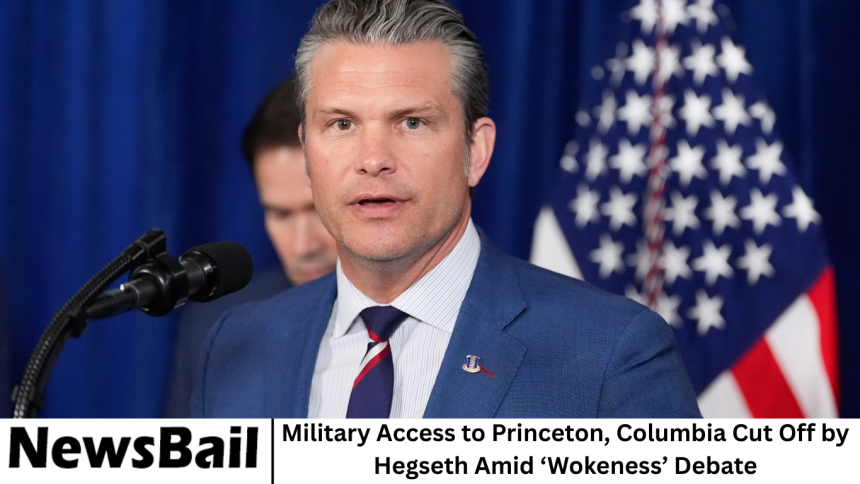
A major controversy has erupted in the United States after Defense Secretary Pete Hegseth announced a policy cutting off military participation in certain educational programs at elite universities such as Princeton University and Columbia University.
According to Hegseth, some of the country’s most prestigious universities have become environments promoting what he described as “wokeness and weakness,” which he believes conflicts with the values and mission of the U.S. armed forces.
Supporters argue the policy protects military culture and redirects education resources to institutions that better support national defense. Critics, however, warn that cutting ties with elite universities may limit the intellectual development of military leaders and politicize military education.
More Read: Fresh Voices in Comedy Are Reshaping Jewish Humor and Faith
The Longstanding Relationship Between the Military and Universities
For decades, the U.S. military has maintained strong partnerships with universities across the country. Officers often pursue advanced degrees at civilian institutions as part of their professional development.
These programs serve several important purposes:
- Developing strategic thinking among military leaders
- Exposing officers to diverse perspectives
- Encouraging collaboration between the military and civilian researchers
- Supporting national security research
Institutions like Princeton University and Columbia University have historically hosted military fellows who study subjects such as international relations, public policy, cybersecurity, and security strategy.
Many officers attend these programs through fellowships or Department of Defense-funded educational initiatives. The programs are designed to provide a broader intellectual experience than traditional military training.
For many years, these partnerships were viewed as mutually beneficial. Universities gained insight from experienced military professionals, while officers benefited from academic expertise and exposure to civilian viewpoints. However, the new policy has disrupted this longstanding collaboration.
The Policy Announced by Pete Hegseth
Defense Secretary Pete Hegseth announced that the Department of Defense would end certain military education partnerships with several elite universities. The policy specifically blocks military officers from attending certain fellowship programs, graduate studies, and training initiatives at institutions the Pentagon considers ideologically problematic.
Among the universities affected are:
- Princeton University
- Columbia University
- Yale University
- Brown University
- Massachusetts Institute of Technology
The decision will mainly affect programs designed for mid-career military officers seeking advanced education in fields related to national security and public policy.
While the policy does not completely ban all military personnel from enrolling independently at these institutions, it stops the Department of Defense from sponsoring or funding participation in specific programs.
Why the Pentagon Says the Policy Was Necessary
According to Pete Hegseth, the policy is intended to address ideological bias in elite universities. He argues that some universities have become environments dominated by political activism and progressive ideology rather than academic neutrality.
Hegseth claims these campuses promote narratives that portray the United States and its military in a negative light. From his perspective, sending military officers into such environments could undermine morale, discipline, and national security priorities.
Supporters of the decision believe that:
- Universities increasingly promote political agendas
- Military funding should not support institutions hostile to defense policies
- Officers can receive excellent education at other universities
- Military culture should be protected from ideological pressure
They argue that the Pentagon should partner with institutions that emphasize national security and respect for the armed forces.
Critics Warn of Intellectual Isolation
Opponents of the policy believe the decision could harm the military’s intellectual development. Experts say one of the greatest strengths of military education programs has been exposure to diverse viewpoints. Elite universities often bring together scholars, diplomats, policymakers, and international students from around the world.
This environment allows officers to:
- Engage in debates about foreign policy
- Study emerging security challenges
- Learn from global experts
- Develop strategic thinking skills
Critics argue that removing officers from these environments could limit their ability to understand complex geopolitical issues.
Some former military leaders also warn that isolating officers from academic institutions could weaken the connection between the military and civilian society.
Civil-military cooperation has long been considered essential to a healthy democratic system.
The Cultural Debate Over “Wokeness”
At the center of the controversy is the highly charged political term “wokeness.”
Supporters of Pete Hegseth use the term to describe policies and ideas related to diversity training, identity politics, and social justice initiatives. Critics of these programs argue they place too much emphasis on identity and political ideology rather than merit and national unity.
Supporters of diversity initiatives, however, say these programs help address historical inequalities and create more inclusive institutions.
The debate has spread across many sectors of American society, including:
- Universities
- Government agencies
- Corporate workplaces
- The military
In recent years, discussions about diversity training and social justice programs have become particularly intense within the armed forces. Some political leaders believe these initiatives distract from military readiness, while others argue they improve fairness and representation within the ranks.
Universities Respond to the Policy
Universities affected by the policy have expressed disappointment but remain cautious in their public statements. Institutions like Princeton University and Columbia University emphasize their long history of supporting military education and hosting veterans and service members.
Many faculty members believe that military fellows contribute valuable perspectives to academic discussions. For example, officers studying national security policy often bring real-world experience from military operations, intelligence work, and international deployments.
Their presence in classrooms can enrich discussions about diplomacy, conflict resolution, and global security challenges. Universities also argue that open dialogue between military professionals and academic experts strengthens national security rather than weakening it.
Potential Changes to Military Education
The Pentagon has indicated that it plans to redirect military education programs to other universities.
Possible alternatives include:
- Public universities with strong defense studies programs
- Military academies and war colleges
- Institutions with close ties to the Department of Defense
Military academies such as United States Military Academy and United States Naval Academy already provide advanced leadership education. In addition, war colleges such as the United States Army War College specialize in training senior officers in strategic leadership and national security planning.
Supporters of the policy argue that these institutions can provide high-quality education without the ideological tensions present at some civilian universities.
Impact on Civil-Military Relations
One of the most significant concerns raised by critics involves the potential impact on civil-military relations. Historically, the United States has emphasized strong cooperation between the military and civilian institutions.
Universities have played an important role in shaping defense strategy, conducting research, and training future leaders. By reducing partnerships with elite universities, the Pentagon may unintentionally weaken these relationships.
Experts worry that fewer interactions between military officers and civilian academics could create misunderstandings about defense policy and national security challenges.
Maintaining open dialogue between the military and academic community has long been considered essential for democratic oversight and informed policymaking.
Political Implications
The controversy surrounding the policy highlights the growing politicization of education and national security issues in the United States. Supporters of Pete Hegseth see the decision as a bold effort to challenge ideological bias within elite institutions.
Critics argue that the policy itself represents political interference in military education. The debate has drawn attention from lawmakers, educators, and military veterans across the country. Some members of Congress have called for further review of the policy, while others have praised the Pentagon for taking action.
Regardless of political viewpoints, the decision has intensified national discussions about the role universities play in shaping future leaders.
What the Future May Hold
The policy cutting military access to certain universities is expected to take effect in the upcoming academic cycle.
However, the long-term future of the policy remains uncertain.
Possible developments include:
- Congressional review or hearings
- Policy adjustments by future administrations
- New partnerships between the military and universities
- Continued debate about ideology in higher education
The controversy has already sparked broader conversations about how the military should educate its leaders in a rapidly changing world. As technology, geopolitics, and global security challenges evolve, the need for well-educated military leaders will only become more important.
Frequently Asked Question
Who ordered the restriction on military access to elite universities?
The policy was announced by Pete Hegseth as part of changes to military education partnerships.
Which universities are affected by the policy?
Major institutions mentioned include Princeton University, Columbia University, Yale University, and Brown University.
Does the policy completely ban military students from these universities?
No. The policy mainly stops Department of Defense funding for certain fellowship and training programs.
Why did the Pentagon make this decision?
Officials say some universities promote ideological viewpoints that conflict with military culture and national security priorities.
What programs are most affected?
Professional education programs and fellowships for mid-career officers are the most directly impacted.
What alternatives will military officers have?
Officers may study at other universities, war colleges, or military academies such as the United States Military Academy.
Why is the decision controversial?
Critics believe the policy politicizes education and limits exposure to diverse academic perspectives, while supporters argue it protects military values.
Conclusion
The decision by Pete Hegseth to cut military access to universities such as Princeton University and Columbia University represents one of the most controversial education policies affecting the armed forces in recent years. Supporters believe the move protects military values and prevents taxpayer money from supporting institutions they view as politically biased.