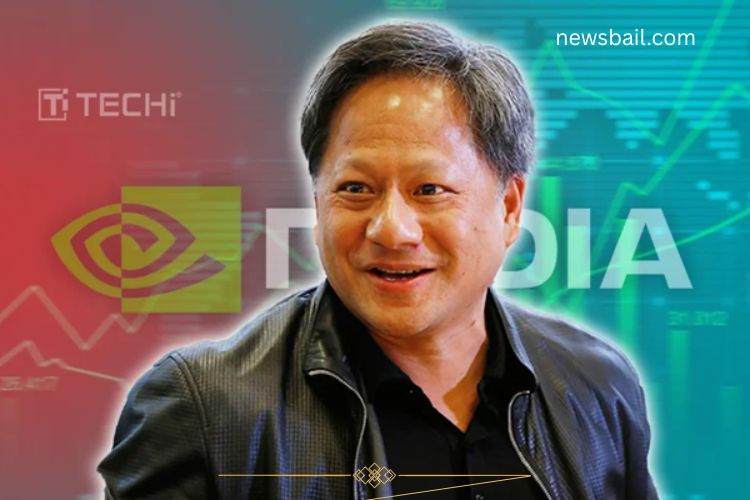
Jensen Huang, CEO of Nvidia, has made one thing unmistakably clear: TSMC stands at the heart of Nvidia’s success and the future of advanced chip technology. By describing TSMC as one of the most important companies in history and calling investment in its stock a smart move, Huang underscored the deep strategic value of this partnership.
This endorsement goes far beyond praise. It signals confidence in TSMC’s manufacturing leadership and highlights how essential advanced semiconductor partnerships have become in the AI era. As artificial intelligence reshapes industries worldwide, companies like Nvidia depend heavily on world-class chip fabrication to stay competitive.
Why TSMC Is Critical to Nvidia’s Growth
Nvidia designs some of the world’s most powerful graphics processing units (GPUs) and AI accelerators. However, it does not manufacture these chips itself. Instead, it relies on TSMC’s cutting-edge fabrication facilities to turn complex designs into physical silicon.
Modern AI chips demand extreme precision, advanced process nodes, and massive production scale. TSMC leads the global semiconductor manufacturing industry in all three areas. Its ability to produce smaller, faster, and more energy-efficient chips allows Nvidia to push the boundaries of AI performance.
Without TSMC’s advanced manufacturing capabilities, Nvidia would struggle to deliver the high-performance chips required for large-scale AI workloads, data centers, autonomous systems, and next-generation computing platforms. In short, TSMC transforms Nvidia’s innovation into reality.
The Rubin Platform: A Bold Step Forward
During a recent visit to Taipei, Huang emphasized the importance of Nvidia’s next-generation AI chip platform, known as Rubin. Every chip in this platform represents a major technological leap. Rubin is designed to power increasingly complex AI models that demand unprecedented computing speed and efficiency.
Building such advanced chips requires more than creative design. It demands fabrication expertise at the highest level. TSMC’s advanced process technologies make it possible to manufacture these sophisticated processors at scale while maintaining performance and energy efficiency.
The launch of Rubin signals Nvidia’s commitment to staying ahead in the global AI race. At the same time, it demonstrates how essential TSMC remains in executing Nvidia’s ambitious roadmap. Innovation at this level simply cannot happen without a manufacturing partner capable of matching the pace of design breakthroughs.
A Mutually Beneficial Semiconductor Partnership
The Nvidia–TSMC relationship represents a powerful example of strategic interdependence in the semiconductor industry. Nvidia relies on TSMC to build its chips, while TSMC benefits from high-volume, high-value clients like Nvidia that consistently push technological boundaries.
This mutually beneficial partnership drives innovation across the entire AI ecosystem. As Nvidia develops increasingly powerful AI processors, TSMC refines its manufacturing technologies to meet new performance standards. In turn, those advancements enable even more sophisticated chip designs.
Such collaboration fuels much of today’s progress in artificial intelligence hardware. From large language models to autonomous vehicles and advanced robotics, many breakthrough technologies depend on the chips that emerge from this alliance.
Geopolitical Challenges and Market Realities
While the technological outlook appears strong, geopolitical factors introduce complexity. Huang has addressed concerns about security and backdoor allegations in Nvidia products, firmly rejecting such claims. He has also confirmed ongoing discussions with the U.S. government regarding chip sales to China.
Export controls and political decisions increasingly shape the global semiconductor landscape. Nvidia has discontinued certain China-focused products in response to regulatory changes. These actions illustrate how government policies directly affect business strategy in the AI chip sector.
Although global demand for AI chips continues to surge, companies must navigate restrictions carefully. Nvidia aims to serve customers worldwide, but compliance with evolving regulations remains a critical priority. This balancing act between growth and policy constraints defines much of today’s semiconductor industry dynamics.
Explosive Growth in AI Workloads
AI workloads are expanding at an exponential rate across industries. Healthcare organizations analyze massive datasets for medical research. Financial institutions deploy AI models for risk assessment and fraud detection. Automotive companies invest heavily in autonomous driving technologies. Cloud providers scale infrastructure to support generative AI applications.
All these use cases require faster, more energy-efficient chips capable of handling enormous data volumes. Nvidia’s AI processors play a central role in powering these systems. TSMC’s advanced manufacturing ensures those processors meet strict performance and efficiency demands.
As AI adoption accelerates, the need for cutting-edge semiconductors will only intensify. Companies that can deliver reliable, high-performance hardware at scale will dominate the next phase of digital transformation.
Investment Confidence and Long-Term Outlook
Huang’s strong endorsement of TSMC carries weight in financial markets. When the leader of a major AI chip company publicly expresses confidence in a manufacturing partner, investors take notice. His comments reflect belief in TSMC’s long-term growth potential and its central role in the global semiconductor supply chain.
Strong AI demand, combined with ongoing technological advancements, positions both Nvidia and TSMC for sustained growth. However, future success depends on more than innovation alone. Managing geopolitical risk, expanding manufacturing capacity, and maintaining supply chain resilience will prove equally important.
Despite these challenges, the long-term outlook for the Nvidia–TSMC partnership remains highly positive. AI continues to transform industries, and advanced chips serve as its foundation. As long as both companies maintain technological leadership and strategic alignment, they will remain at the forefront of the AI revolution.
The Future of Advanced Chip Technology
Advanced semiconductor manufacturing stands at the center of modern innovation. Artificial intelligence, high-performance computing, cloud infrastructure, and emerging technologies all rely on increasingly sophisticated chips. Partnerships like that between Nvidia and TSMC demonstrate how collaboration drives progress in this highly complex industry.
Rubin represents only one milestone in a broader journey toward more powerful and efficient AI systems. Future chip generations will likely push boundaries even further, requiring tighter integration between design and manufacturing.
Sustained collaboration, strategic investment, and careful navigation of global regulations will shape the next chapter of AI hardware development. If Nvidia continues to innovate in chip design and TSMC maintains its leadership in fabrication technology, both companies will remain indispensable players in the rapidly evolving world of artificial intelligence.
Strong partnerships, advanced manufacturing, and visionary leadership together define the path forward. In the AI-driven future, few alliances carry as much significance as the one powering the world’s most advanced chips today.
Frequently Asked Questions:
Why did the CEO of Nvidia praise TSMC?
Nvidia’s CEO highlighted TSMC’s critical role in manufacturing the company’s advanced AI chips. TSMC provides the cutting-edge fabrication technology needed to produce high-performance, energy-efficient processors that power data centers, AI models, and next-generation computing systems.
Why is TSMC important to Nvidia’s AI strategy?
TSMC manufactures Nvidia’s most advanced chips using leading-edge semiconductor process nodes. As AI workloads grow more complex, Nvidia depends on TSMC’s precision, scale, and innovation to deliver faster and more efficient AI processors.
What makes investing in TSMC stock considered a “smart move”?
TSMC dominates global semiconductor manufacturing and supplies major technology companies worldwide. With rising demand for AI chips, high-performance computing, and advanced electronics, investors see strong long-term growth potential in TSMC’s market leadership and production capabilities.
How does the Nvidia–TSMC partnership benefit both companies?
Nvidia gains access to world-class chip manufacturing, while TSMC secures high-volume, high-value business from one of the leading AI chip designers. This mutually beneficial relationship drives innovation and strengthens both companies’ positions in the global semiconductor industry.
What role do AI chips play in today’s technology landscape?
AI chips power applications such as machine learning models, cloud computing, autonomous vehicles, robotics, and generative AI systems. Companies across industries rely on these processors to handle massive data processing tasks efficiently.
Are geopolitical issues affecting Nvidia and TSMC?
Yes. Export controls, particularly related to China, have influenced product strategies and chip sales. Nvidia has adjusted certain offerings to comply with U.S. regulations while continuing discussions with government authorities.
What is Nvidia’s next-generation AI platform mentioned in the discussion?
Nvidia’s upcoming AI platform, Rubin, represents a major technological leap. It aims to deliver higher performance and efficiency for large-scale AI workloads, relying heavily on TSMC’s advanced manufacturing capabilities.
Conclusion
trategic collaboration between Nvidia and TSMC defines the future of advanced AI chip technology. Jensen Huang’s strong endorsement of TSMC reflects more than confidence—it highlights a powerful alliance that fuels innovation, scalability, and global competitiveness in the semiconductor industry. As AI workloads surge across industries, demand for faster, smarter, and more energy-efficient chips will continue to rise. Nvidia’s groundbreaking designs, combined with TSMC’s world-class manufacturing expertise, create a technological engine driving the next era of artificial intelligence.