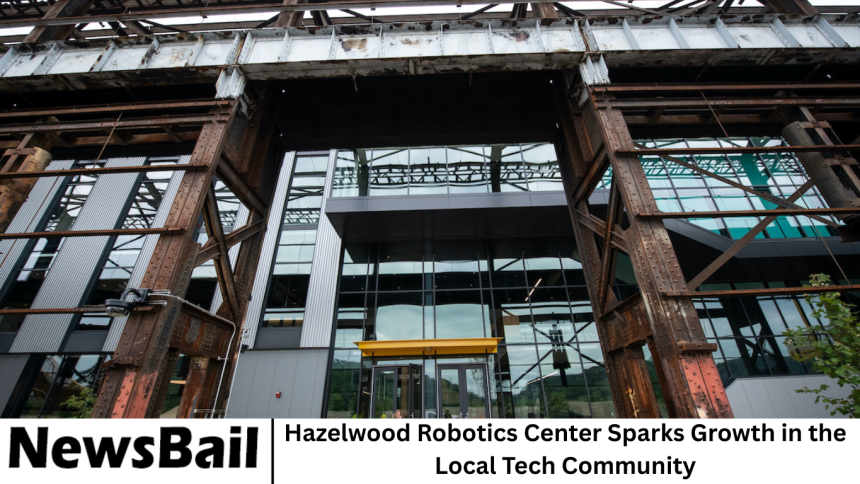
Across the United States, cities are redefining their identities by investing in innovation, technology, and research. One community that has recently captured national attention is Hazelwood, a historic neighborhood in Pittsburgh that is experiencing a remarkable transformation.
At the center of this change is the Robotics Innovation Center, a state-of-the-art research facility designed to advance robotics technology while strengthening the local economy and community. Once known primarily for its steel mills and industrial heritage.
Hazelwood is now emerging as a hub for advanced technology and innovation. The Robotics Innovation Center represents a significant step in this evolution, bringing together researchers, students, entrepreneurs, and community leaders to collaborate on groundbreaking robotics research.
Hazelwood’s Industrial Past
To understand the significance of the Robotics Innovation Center, it is important to look at Hazelwood’s history. For much of the 20th century, Hazelwood was an industrial powerhouse. Steel mills along the Monongahela River employed thousands of workers.
And contributed to Pittsburgh’s reputation as the steel capital of the world. The mills provided stable jobs and helped support the growth of the surrounding neighborhood. However, the decline of the steel industry in the late 20th century had a devastating impact on many communities across the region.
Factories closed, jobs disappeared, and large industrial sites were left vacant. Hazelwood was one of the neighborhoods affected by this economic shift. For years, the former steel mill site remained largely unused, symbolizing the challenges faced by post-industrial communities.
But over time, city planners, universities, community organizations, and investors began working together to reimagine the area. Their goal was ambitious: transform a former industrial site into a vibrant innovation district focused on technology, research, and sustainable development.
The Birth of Hazelwood Green
The redevelopment project that helped spark Hazelwood’s transformation is known as Hazelwood Green. Built on the site of the former steel mill, this large development area has been designed to support innovation, research, housing, and community spaces.
Hazelwood Green aims to create a modern urban environment where technology companies, research institutions, and local residents can coexist and collaborate. The project includes offices, laboratories, parks, housing developments, and public gathering spaces.
The Robotics Innovation Center plays a key role in this vision. As one of the flagship developments in Hazelwood Green, the center serves as a magnet for researchers, startups, and technology companies.
By attracting talent and investment, the robotics center helps drive the broader growth of the innovation district and contributes to Hazelwood’s ongoing revitalization.
The Robotics Innovation Center
The Robotics Innovation Center is a large research facility dedicated to advancing robotics and artificial intelligence technologies. Developed as an expansion of Carnegie Mellon University’s robotics research initiatives, the center provides a modern environment where scientists and engineers can conduct complex robotics experiments.
The building offers extensive laboratory space, collaborative research areas, and specialized testing environments designed specifically for robotics development. Unlike traditional research labs, the Robotics Innovation Center was built with flexibility in mind.
Robotics research often requires large testing spaces where machines can move freely, interact with objects, and navigate challenging environments. The center’s design accommodates these needs by including open testing areas, robotics workshops, and advanced simulation facilities.
This unique environment allows researchers to develop and test new robotics technologies that could eventually be used in industries ranging from healthcare to transportation.
Expanding the Boundaries of Robotics Research
The Robotics Innovation Center supports a wide range of research areas. Robotics is no longer limited to factory automation; today’s robots perform tasks in diverse environments and industries.
Researchers at the Hazelwood center are exploring robotics applications such as:
- Autonomous vehicles and transportation systems
- Medical robotics and surgical assistance
- Agricultural automation
- Disaster response robots
- Environmental monitoring systems
- Industrial robotics and manufacturing automation
- Space exploration technology
These projects demonstrate the growing importance of robotics in solving real-world challenges.
By bringing together experts from multiple fields—including engineering, computer science, artificial intelligence, and data science—the robotics center encourages interdisciplinary collaboration. This approach often leads to innovative solutions that would be difficult to achieve within a single discipline.
A Hub for Collaboration
One of the key strengths of the Robotics Innovation Center is its emphasis on collaboration.
The facility is designed to bring together researchers from universities, engineers from technology companies, and entrepreneurs from startups. This collaborative environment helps accelerate the development of new technologies and encourages the exchange of ideas.
Industry partnerships play an important role in the center’s work. Technology companies often collaborate with university researchers to develop new robotics applications, test prototypes, and explore commercial opportunities.
These partnerships allow academic research to move beyond theoretical concepts and become practical technologies that can benefit society. The presence of industry partners also helps create new jobs and investment opportunities within the Hazelwood community.
Economic Growth and Job Creation
The development of the Robotics Innovation Center is already contributing to economic growth in the region.
Technology companies are increasingly attracted to Pittsburgh due to its strong research institutions and growing tech ecosystem. The robotics center strengthens this reputation and encourages businesses to establish offices and research labs in the area.
As the innovation district continues to grow, new job opportunities are emerging in fields such as:
- Robotics engineering
- Artificial intelligence development
- Data science
- Advanced manufacturing
- Software development
- Research and technical support
These high-tech jobs can provide long-term economic stability for the region.
In addition to technology roles, the redevelopment of Hazelwood Green also creates jobs in construction, facilities management, administration, and community services.
Supporting Startups and Entrepreneurs
Innovation districts thrive when entrepreneurs have the resources they need to turn ideas into businesses. The Hazelwood robotics center contributes to this process by providing opportunities for startups to collaborate with researchers and access advanced facilities.
Startup founders can test robotics prototypes, refine new technologies, and connect with investors within the innovation ecosystem. This environment helps transform early-stage ideas into viable companies.
Over time, successful startups can grow into larger businesses that create additional jobs and contribute to the local economy. By supporting entrepreneurship, the robotics center plays a key role in strengthening the broader tech community.
Education and Workforce Development
Another important mission of the Robotics Innovation Center is education. As robotics and artificial intelligence become more important in modern industries, the demand for skilled workers continues to grow. The center helps address this demand by supporting educational programs and workforce training initiatives.
Students from universities, colleges, and local schools can participate in research projects, internships, and workshops that introduce them to robotics technology. Hands-on learning experiences are particularly valuable in robotics education because they allow students to apply theoretical knowledge in practical settings.
These programs help prepare the next generation of engineers, programmers, and technology innovators.
Inspiring Young Innovators
The robotics center also focuses on outreach programs designed to inspire younger students. Robotics clubs, competitions, and STEM workshops allow children and teenagers to learn about robotics in an engaging and interactive way.
These programs encourage creativity, problem-solving, and teamwork—skills that are essential in modern technology fields. Exposure to robotics at a young age can spark curiosity and motivate students to pursue careers in science, technology, engineering, and mathematics.
For many young participants, visiting the robotics center may be their first opportunity to see advanced robotics research in action.
Community Engagement
While the robotics center focuses on cutting-edge technology, community engagement remains an important priority. The facility includes public spaces where residents can attend events, exhibitions, and educational programs related to robotics and innovation.
Community organizations have worked closely with the developers of Hazelwood Green to ensure that local residents benefit from the neighborhood’s transformation. Efforts have been made to create job opportunities, provide workforce training, and support local businesses.
This approach helps ensure that technological progress also contributes to social and economic development within the community.
The Growing Pittsburgh Tech Ecosystem
Pittsburgh has gradually transformed into one of the leading technology centers in the United States.
The city is particularly well known for its contributions to robotics and artificial intelligence research. Several major technology companies have established offices in the region to take advantage of its talented workforce and strong academic institutions.
The Hazelwood Robotics Innovation Center strengthens this ecosystem by expanding research capacity and attracting new partners. As more companies and researchers move into the area, the network of collaboration continues to grow.
This dynamic environment encourages innovation and helps position Pittsburgh as a global leader in robotics development.
Challenges and Opportunities
Despite the many benefits of Hazelwood’s technological growth, challenges remain.
Rapid development can sometimes raise concerns about housing affordability, economic inequality, and access to opportunities. Community leaders are working to address these issues by promoting inclusive development and ensuring that residents are involved in decision-making processes.
Workforce training programs and educational initiatives are particularly important for helping local residents access new technology careers. By investing in education and community engagement, the robotics center aims to create long-term benefits that extend beyond research and innovation.
The Future of Hazelwood
The Robotics Innovation Center represents only the beginning of Hazelwood’s transformation. Future development plans for Hazelwood Green include additional research facilities, startup incubators, housing developments, parks, and commercial spaces.
As the innovation district continues to grow, Hazelwood could become one of the most important technology hubs in the region. The combination of advanced research, entrepreneurial energy, and community engagement creates a powerful foundation for long-term success.
If these efforts continue, Hazelwood may serve as a model for how former industrial communities can reinvent themselves in the age of technology.
Frequently Asked Question
What is the Hazelwood Robotics Innovation Center?
The Hazelwood Robotics Innovation Center is a research facility dedicated to robotics and artificial intelligence development. It supports advanced robotics research, collaboration between industry and academia, and educational programs.
Where is the robotics center located?
The center is located in the Hazelwood Green redevelopment district in Pittsburgh, a former industrial site that has been transformed into an innovation hub.
What types of research take place at the robotics center?
Researchers work on projects involving autonomous vehicles, medical robotics, agricultural automation, disaster response robots, and many other applications.
How does the robotics center benefit the local community?
The center creates jobs, supports education programs, provides research opportunities, and contributes to economic growth in the Hazelwood neighborhood.
Does the center support startups?
Yes. The robotics center encourages collaboration with startups and technology companies, providing opportunities for entrepreneurs to develop and test new robotics technologies.
Are students involved in robotics research at the center?
Students from universities and local schools participate in internships, research programs, robotics clubs, and STEM education initiatives hosted at the center.
Why is robotics important for the future?
Robotics technology can improve efficiency, safety, and productivity across many industries, including healthcare, manufacturing, agriculture, transportation, and disaster response.
Conclusion
The Hazelwood Robotics Innovation Center is more than just a research facility—it is a symbol of renewal and progress. By transforming a former industrial site into a hub for robotics innovation, Hazelwood is demonstrating how communities can adapt and thrive in a rapidly changing world. The center supports groundbreaking research, attracts technology companies, creates job opportunities, and inspires the next generation of engineers and innovators.