

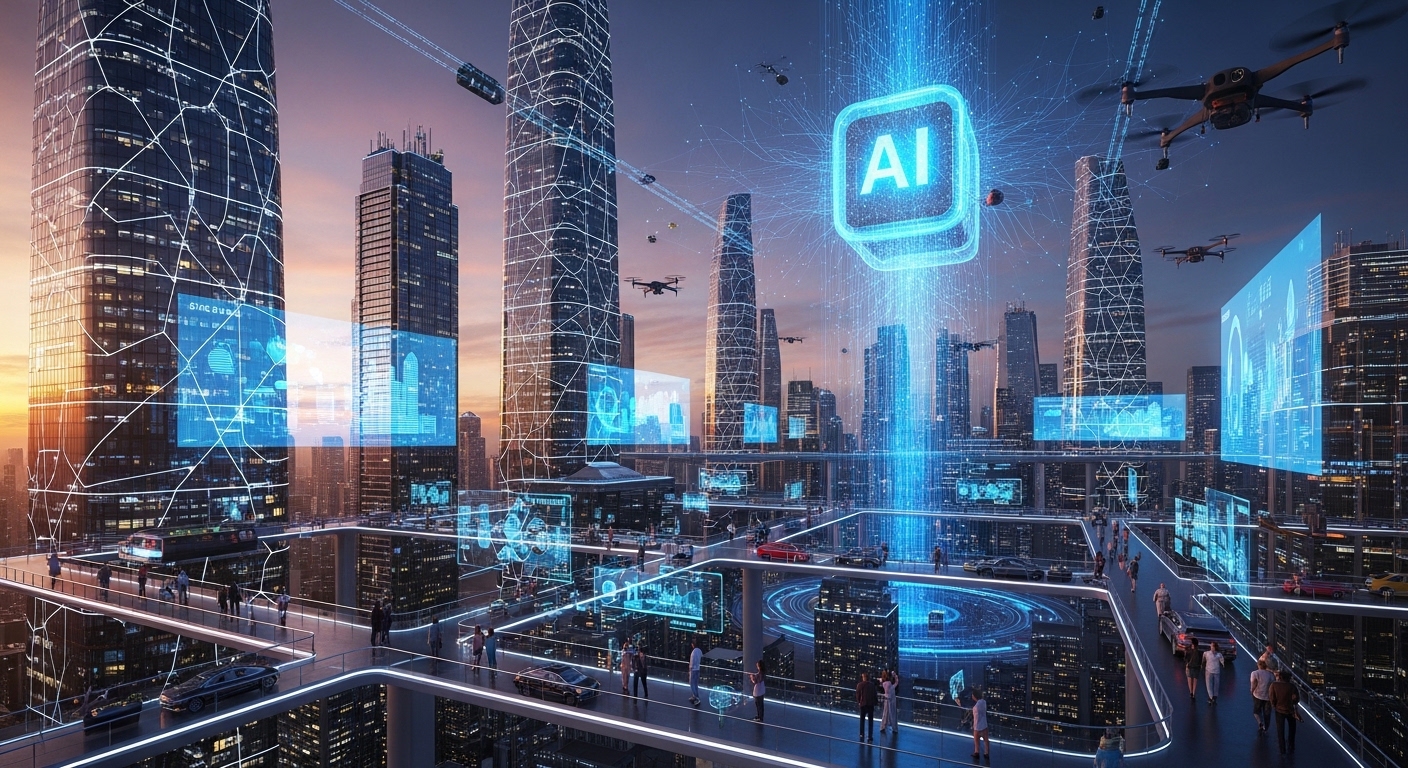
Artificial intelligence is rapidly becoming the backbone of future technological development, reshaping how industries, governments, and individuals will operate in the coming decades. It is no longer limited to simple automation or data processing; instead, AI is evolving into a powerful decision-making system capable of driving innovation across science, medicine, communication, transportation, and everyday human life. The future will be deeply influenced by intelligent systems that learn, adapt, and improve continuously.
Autonomous Systems Evolution
Self-Driving Mobility
Self-driving vehicles powered by artificial intelligence are expected to redefine transportation in the future. These systems will reduce human error, improve road safety, and optimize traffic flow. As technology advances, autonomous cars will become more common in cities, offering efficient, sustainable, and highly reliable mobility solutions for everyday travel needs.
Drone Delivery Networks
AI-driven drone delivery systems will transform logistics by enabling faster and more efficient delivery services. Packages, medical supplies, and essential goods will be transported with minimal human involvement. This technology will reduce delivery times significantly while improving accessibility in remote and hard-to-reach regions around the world.
Smart Air Traffic Control
Future air traffic systems will rely heavily on artificial intelligence to manage complex flight networks. AI will analyze weather conditions, optimize flight routes, and reduce delays. This will improve safety and efficiency in aviation, ensuring smoother operations for both commercial and cargo flights across global airspaces.
Industrial Robotics Expansion
Artificial intelligence-powered robots will dominate future manufacturing industries. These robots will handle complex assembly tasks with precision and speed. They will work alongside humans, improving productivity, reducing costs, and ensuring consistent quality in large-scale production environments across multiple sectors worldwide.
Space Exploration Automation
AI will play a critical role in future space exploration missions. Intelligent systems will control spacecraft, analyze planetary data, and support astronauts in deep space environments. This will reduce risks, enhance research capabilities, and accelerate humanity’s understanding of the universe beyond Earth.
Healthcare Innovation Future
AI-Powered Early Diagnosis
Future healthcare systems will use AI to detect diseases at extremely early stages. Advanced algorithms will analyze genetic data, lifestyle patterns, and medical history to identify risks before symptoms appear. This will lead to faster treatment and significantly improved survival rates worldwide.
Personalized Treatment Plans
AI will enable fully personalized medical treatments based on individual genetic makeup and health data. Doctors will use intelligent systems to design therapies tailored specifically to each patient, improving effectiveness and reducing side effects in long-term healthcare management.
Robotic Surgery Precision
Next-generation robotic surgery systems will be guided by artificial intelligence for maximum precision. These systems will perform highly complex operations with minimal invasiveness, reducing recovery time and surgical risks while increasing success rates in critical medical procedures globally.
Virtual Health Assistants
AI-powered virtual health assistants will become common in homes and hospitals. They will provide medical advice, monitor chronic conditions, and remind patients about medication schedules, improving healthcare accessibility and reducing pressure on healthcare professionals worldwide.
Drug Discovery Acceleration
Artificial intelligence will revolutionize pharmaceutical research by simulating chemical interactions and predicting drug effectiveness. This will significantly shorten the time required to develop new medicines, helping fight diseases more quickly and efficiently than ever before.
Smart Cities Development
Intelligent Traffic Systems
Future cities will use AI-driven traffic systems to manage congestion and improve transportation flow. These systems will adjust signals in real time based on traffic density, reducing travel time and environmental pollution in urban areas.
Energy Efficient Infrastructure
AI will optimize energy consumption in smart cities by controlling lighting, heating, and power distribution systems. This will reduce waste, lower costs, and support sustainable urban development through intelligent resource management strategies.
Automated Public Services
Government services will become more efficient through AI automation. Citizens will access digital systems for documentation, permits, and support services, reducing delays and improving transparency in public administration.
Smart Waste Management
AI-powered waste systems will monitor garbage levels and optimize collection routes. This will improve cleanliness, reduce operational costs, and support environmentally friendly urban living conditions in future cities.
Disaster Prediction Systems
Artificial intelligence will help predict natural disasters such as floods, earthquakes, and storms. Early warning systems will save lives by providing timely alerts and enabling faster emergency responses.
Future Education Systems
AI Personalized Learning
Education will become highly personalized through AI systems that adapt lessons based on student performance. This will ensure better understanding, improved retention, and more effective learning outcomes for students worldwide.
Virtual Reality Classrooms
Future classrooms will use AI combined with virtual reality to create immersive learning environments. Students will experience interactive simulations that enhance understanding of complex subjects in science, history, and engineering.
Intelligent Tutoring Systems
AI tutors will provide instant help to students anytime, offering explanations, practice questions, and feedback. This will make education more accessible and reduce dependency on traditional classroom structures.
Automated Skill Assessment
Future systems will evaluate student skills using AI-based performance tracking. This will provide accurate insights into strengths and weaknesses, helping educators improve teaching strategies.
Global Learning Networks
AI will connect students worldwide through intelligent learning platforms. These systems will encourage cultural exchange, collaboration, and shared educational resources across borders.
Future Communication Technologies
Real-Time Language Translation
AI will enable instant and accurate translation between languages, eliminating communication barriers. This will enhance global collaboration in business, education, and travel.
Emotion-Based Communication
Future AI systems will analyze emotional tone in voice and text, improving understanding in digital communication and making interactions more human-like.
Smart Content Filtering
AI will filter online content more effectively, reducing misinformation and harmful material while ensuring users receive accurate and relevant information.
Advanced Virtual Assistants
Next-generation virtual assistants will understand context deeply, allowing more natural and intelligent conversations in daily life and professional environments.
Holographic Communication Systems
AI combined with holographic technology will enable lifelike remote communication, making virtual meetings feel more realistic and interactive.
Future Business Ecosystems
AI-Driven Decision Making
Businesses will rely on AI systems to make strategic decisions based on real-time data analysis, improving efficiency and profitability.
Predictive Market Analysis
AI will forecast market trends with high accuracy, helping companies plan investments, reduce risks, and maximize returns.
Fully Automated Enterprises
Future companies may operate with minimal human intervention, using AI systems to manage operations, logistics, and customer service.
Intelligent Customer Experience
AI will create highly personalized customer experiences by analyzing preferences and behavior, increasing satisfaction and loyalty.
Cybersecurity Intelligence
Advanced AI systems will protect businesses from cyber threats by detecting and responding to attacks in real time.
Ethical and Global Impact
AI Governance Systems
Future AI governance frameworks will regulate artificial intelligence use, ensuring safety, fairness, and accountability across industries.
Human AI Collaboration
Humans and AI will work together in hybrid systems, combining creativity and computation for better outcomes in all fields.
Data Privacy Evolution
Stronger AI-driven privacy systems will protect user data while maintaining functionality and transparency in digital ecosystems.
Workforce Transformation
AI will reshape global employment patterns, requiring large-scale reskilling and adaptation to new technology-driven roles.
Sustainable AI Development
Future AI systems will focus on sustainability, reducing energy consumption, and supporting eco-friendly technological growth.
Conclusion
Artificial intelligence is set to define the future of technology by transforming industries, cities, healthcare, education, and communication systems. It will create smarter, faster, and more efficient global structures while also introducing ethical challenges that must be managed carefully. The future will depend on balanced AI development that supports human progress, innovation, and sustainability together.
